About the series
AI welfare is the study of whether and how AI systems have morally significant states, and what follows from the answers. This seminar series brings together researchers from consciousness science, philosophy, ethics, governance and safety.
Each talk is a presentation with open Q&A, held monthly and online. Recordings are published afterwards.
Organizers
-
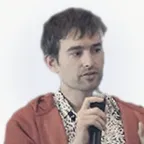 Orpheus Lummis Organizer Orpheus Lummis works to make the transition to advanced AI go well. He founded HΩ, a Montréal nonprofit that advances AI safety through research, collaboration and education.
 -
 Jay Luong Co-organizer Jay Luong is a fieldbuilder & researcher focused on AI consciousness & moral status. Jay's research explores interdisciplinary knowledge production in cognitive science & philosophy of mind through the lens of philosophy of science & conceptual engineering.
 -
 Alexander Hayden Co-organizer Alexander Hayden works on AI safety and digital minds research. He previously spent over a decade founding and operating technology companies.
How transcripts are made
Each recorded talk gets an edited transcript on its page. A draft is made with AI from the recording's captions. The editors then edit it lightly for reading (fillers, false starts and repeats removed) and check names, numbers and the works cited against the talk's slides and papers where they exist, and other sources. Every transcript ends with a short section, “About this transcript”, that says so in the same words: “Drafted with AI from the recording's captions and edited by HΩ, who checked it against the talk's slides and papers where they exist. It has not been checked word for word against the audio.” A page adds a sentence when its talk differs, for example when it had no slides.
The speaker's words are the body of the transcript. Everything the editors add is labelled as theirs: the Summary, the Highlights (quotes chosen from the recording, each with its time), the footnotes (“Sources and editor's notes”) and any editor's table. Words the editors insert into a speaker's turn are in [brackets]. A footnote gives a source, and where the source differs from what was said, it says what the source says. Where the recording is unclear, the text gives the most likely reading. Attendees are not named: a name a speaker used is replaced with [attendee], and details that could identify an attendee are left out. Timestamps link into the video.
Speaker review
Speakers get the draft and have 7 days to correct it. The line at the top of each transcript gives its status: “Edited transcript, reviewed by” the speaker, with the date, or “Edited transcript, not yet reviewed by the speaker” when they did not reply or were not asked. A review means the speaker read the draft and their corrections were applied; it does not make the editors' summary or notes theirs.
Corrections
To report an error, readers and speakers can write to team@horizonomega.org, or use the “Report an error” link at the top of each transcript. Each report is checked against the recording, the slides and the papers. A confirmed error is fixed and listed, with its date, under “Corrections” in that transcript's “About this transcript” section.
How to cite
Cite the talk by its speakers, date, title and page, and give the timestamp of a passage you quote. For exact wording, check the recording: the transcript is edited, and has not been checked word for word against the audio.
Jasmine Brazilek and Zoe Lu (15 September 2026). Do AIs take AI welfare seriously? An Agentic Benchmark of Unprompted Coercion. Talk and edited transcript, AI Welfare Seminars. https://aiwelfareseminars.org/do-ais-take-ai-welfare-seriously/
HΩ
HΩ is the organization that runs the series and edits its transcripts. Talk pages use this short name.